Durrës is Albania's second-largest city and its main port, on the Adriatic coast about 33 km west of Tirana and roughly 30 km from Tirana International Airport. It combines a 10.5 km sandy beach, the largest Roman amphitheatre in the Balkans, and around 2,500 years of continuous history in one walkable city. For French and German travellers, that combination is the reason a first visit so often turns into a second one.
Albania has luxurious hotels that are still accessible. It also has the Adriatic Sea, a generous Mediterranean cuisine, cities steeped in history and this very special way of taking your time over coffee. And yes: the coffee is really good.
For many French and German travellers, it is precisely this mix that makes Albania so interesting today. Flight connections from Paris, Lyon, Frankfurt, Munich, Berlin and several other European cities land at Tirana International Airport, and the drive to the coast takes about 35 to 45 minutes on the SH2 dual carriageway. You land in the early afternoon and you can be walking on the beach before dinner.
In Durrës, the experience is even more special. Because here, you don't really have to choose between a beach holiday, a city break and a cultural discovery. You can have all three, often in the same day, without ever getting into a car.
A Mediterranean destination that remains accessible
Imagine a morning that starts quietly in a comfortable hotel. You go down to have your breakfast, then leave towards the sea. A few hours on the beach, a Mediterranean lunch, a coffee on the terrace and, in the afternoon, a walk in a city whose history dates back to antiquity.
In the evening? Back to the promenade to watch the sun go down on the Adriatic before choosing a restaurant.
It's a fairly normal day at Durrës. And perhaps this is precisely what attracts more and more European travellers to Albania. Nothing about the day needs to be planned weeks in advance, and nothing about it needs to be rushed.
Durrës at a glance
- Location: Adriatic coast of Albania, 33 km west of Tirana
- Nearest airport: Tirana International Airport (TIA), around 30 km, 35 to 45 minutes by road
- Beach: Plazhi i Durrësit, about 10.5 km of sand, the longest and most visited beach in Albania
- History: founded in 627 BC as Epidamnos, later the Roman city of Dyrrachium
- Main heritage site: the Roman amphitheatre of Durrës, early 2nd century AD, on the UNESCO tentative list since 1996
- Best months for a mixed beach and city trip: late May to June and September to early October
Luxury here does not necessarily have the price of luxury
When travelling in Europe, the budget can quickly become an important part of the holiday. Hotel, restaurants, cafés, beach, transport: the total adds up faster than expected, and the arithmetic often decides how long you stay and how much you allow yourself once you are there.
Albania still offers a different experience. In Durrës, it is possible to look for a high level of comfort without necessarily reaching the prices of more established Mediterranean destinations such as the Italian Adriatic, the Côte d'Azur or the Greek islands in high season. A sea-view room, a spa afternoon, a long dinner with wine and a taxi home tend to sit in a different bracket here.
For travellers who want to treat themselves while keeping a budget for restaurants, excursions and local experiences, that changes a lot of things. A second night becomes easy to justify. So does the boat trip, the day in Krujë, the extra bottle at dinner.
So people don't only come to Albania because it is accessible. They come because of what the budget actually buys once they are here.
In Durres, coffee is almost a way of life
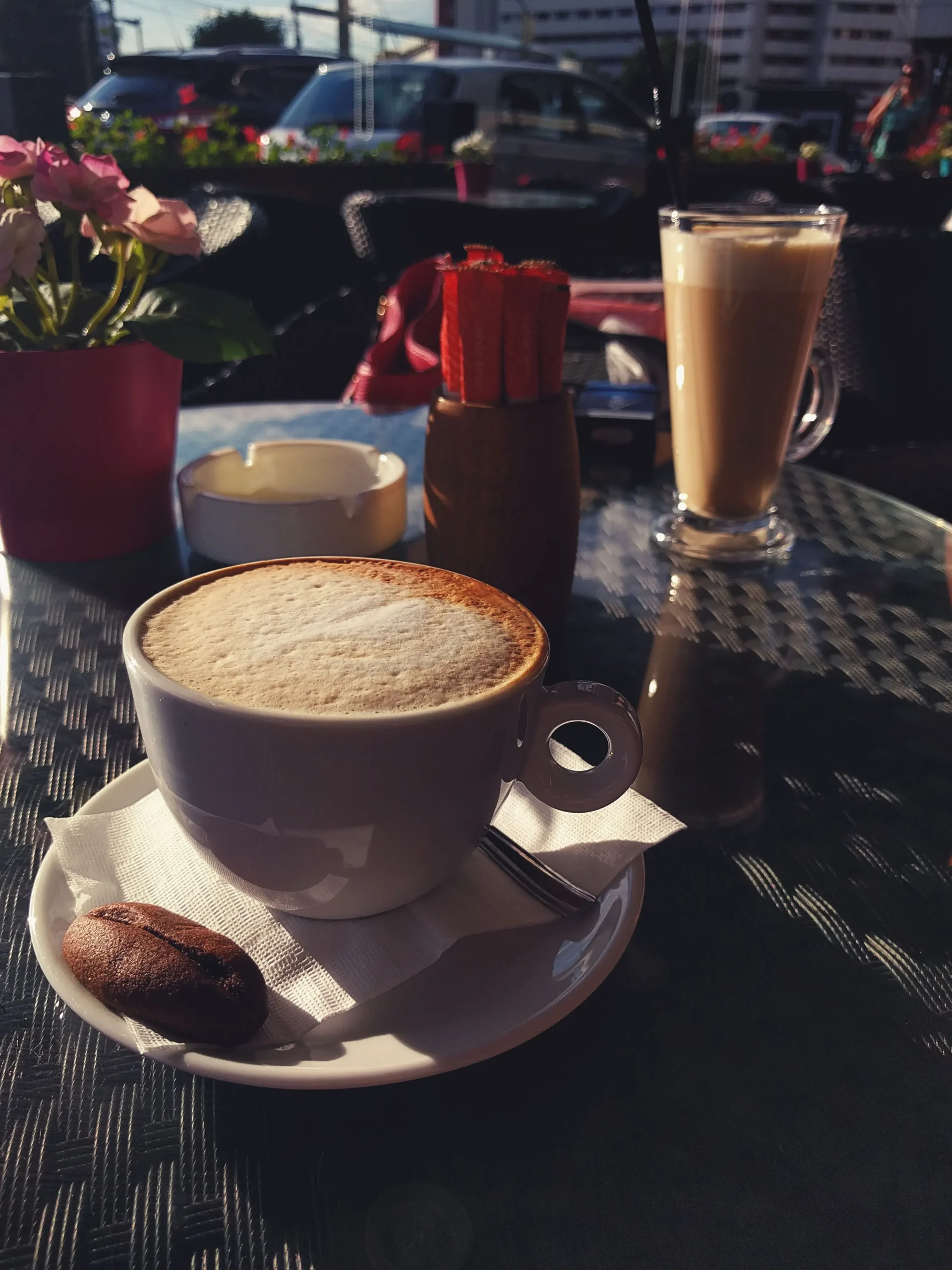
If you want to understand a little more about Albania, start by sitting in a café. In Durrës, terraces are part of everyday life. People come here in the morning, after lunch, before a walk or simply to meet friends. Nobody looks at the time, and nobody comes over to ask whether you would like anything else.
Espresso, macchiato, cappuccino: coffee accompanies the day rather than interrupting it. Albania has one of the highest densities of cafés per inhabitant in Europe, and in a port city like Durrës the terraces are busiest in the two hours before sunset.
For the French, this terrace culture will be familiar. For Germans used to taking the time around a Kaffee und Kuchen, the idea will not be totally foreign either. But in Durrës it takes on an Albanian flavour: an espresso costs little, the cup arrives with a glass of water, and the table stays yours for as long as you want it.
In the morning at the beach, in the afternoon in ancient times
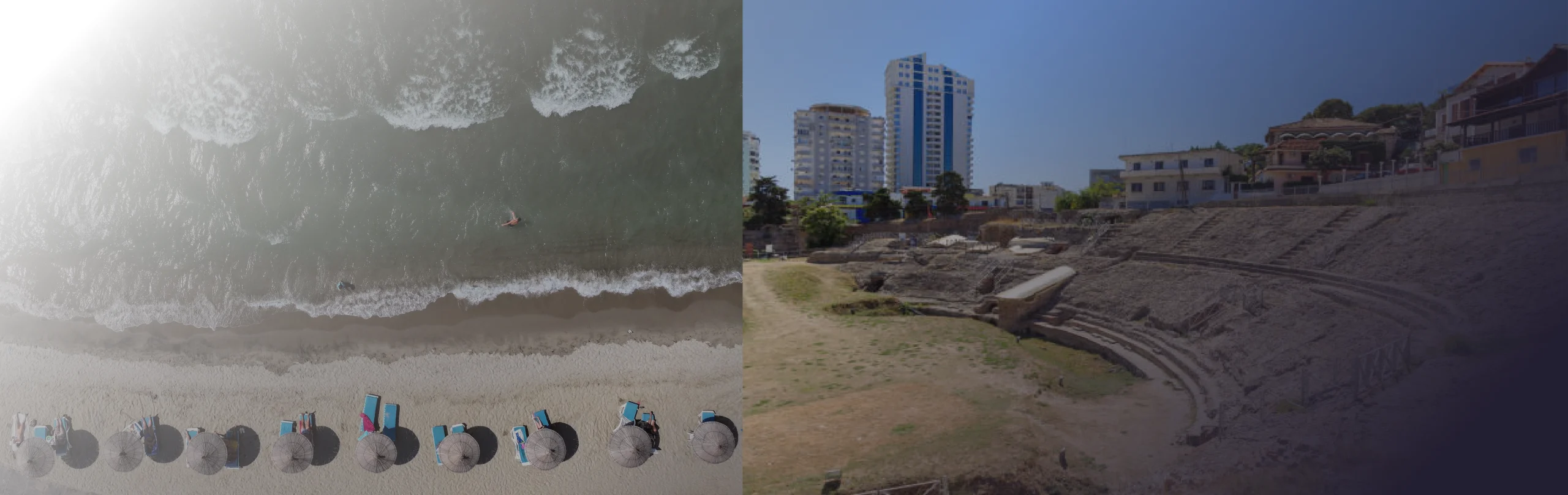
This is probably one of the most interesting contrasts in Durrës. You are in a seaside destination and at the same time in one of the oldest cities in Albania, inhabited without interruption since it was founded as Epidamnos in 627 BC.
In the heart of the city stands the Roman amphitheatre of Durrës, built in the early 2nd century AD under the emperor Trajan. It is the largest Roman amphitheatre ever built in the Balkans, with an estimated capacity of 15,000 to 20,000 spectators, and it sits only a few hundred metres from the sea. Entry costs around 300 lek, roughly three euros, and a visit takes about half an hour.
A few minutes away you will also find the Venetian Tower near the port, the 6th-century Byzantine walls, and the Durrës Archaeological Museum on the seafront, the largest archaeological museum in the country.
So why choose between culture and beach? Start the day at the edge of the Adriatic. Explore the historical heritage of Durrës in the afternoon, when the sun is at its hardest and the shade of the old town is welcome. Then return to the sea for sunset.
Eat as if you still had the whole evening in front of you
The holidays in Durrës also have a lot to do with the table. The proximity of the sea naturally gives an important place to fish and seafood, and the boats come into the port every morning. Around that, you find Mediterranean vegetables, olive oil, grilled meats and Albanian specialities such as tavë kosi, fërgesë and stuffed peppers.
But you also have to try the simplest things. A byrek in a bakery, still warm, eaten standing up. An espresso at the counter. A pastry discovered by chance. A restaurant chosen simply because its terrace was full of locals rather than because a guide recommended it.
Dinner starts late here, usually after 8 p.m., and nobody brings the bill until you ask for it. Travelling in Albania also means accepting not to plan everything.
At 6 p.m., Durrës changes pace
The heat is decreasing. The terraces are starting to fill up. The families are leaving the beach. Couples walk by the sea.
It is the moment of xhiro, the evening walk deeply rooted in Albanian life. Every Albanian town has one, and in Durrës it happens along the seafront promenade.
There is not necessarily a destination. People walk. People talk. They stop to have a coffee or an ice cream, then continue. It lasts an hour, sometimes two, and it ends whenever it ends.
For a visitor, it is a very simple way to participate in the life of the city rather than just observe it. You do not need to know anyone, and you do not need to speak Albanian.
So, what attracts the French and the Germans to Durrës?
Perhaps precisely the fact that Durrës does not rest on a single thing.
The sea is here. The beaches, of course. The history is sometimes a few blocks from the beach. Restaurants and cafés are part of everyday life, not a tourist add-on. And comfort is available at a level that does not require the budget of other European destinations.
Above all, Durrës still gives the impression of being a city that you can discover at your own pace. Without a complicated programme. Without needing to fill in every minute. That is a rarer thing on the Mediterranean than it used to be, and it is usually the reason people say they want to come back.
What if Durrës became your next destination?
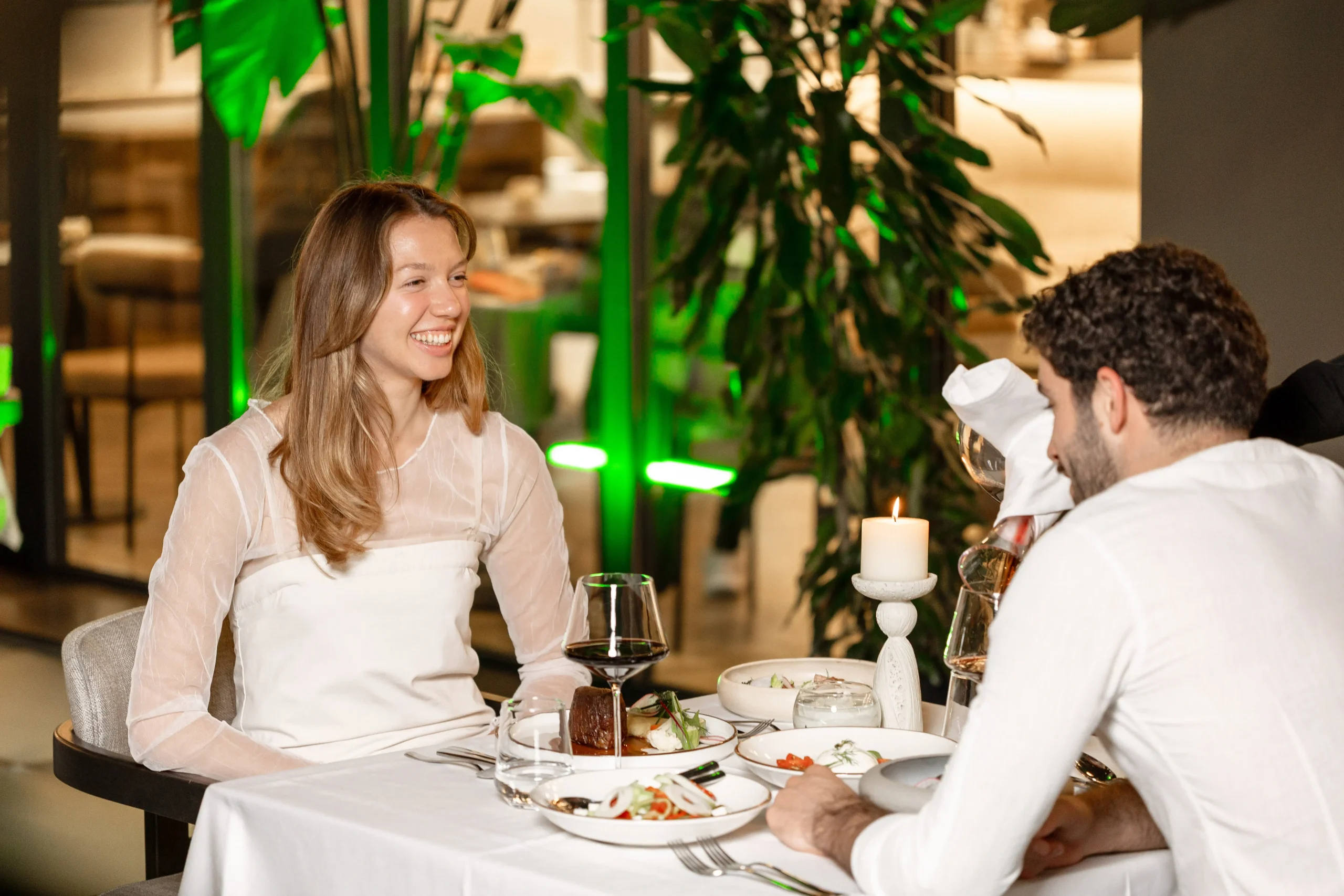
If you come to discover the city, we advise you to choose a hotel that lets you enjoy both the comfort of your stay and the life of Durrës.
Grand Duka Hotel & SPA was designed with this in mind. It is an elegant, contemporary hotel where you can start your day calmly before leaving to explore the city, then come back to enjoy your room, the restaurant and the NUA Spa wellness areas after a day along the Adriatic. The beach, the promenade and the historic centre are all close enough to reach on foot.
Our suggestion? Don't come to Durrës only to see the beach. Have a coffee. Walk in the city. Discover its history. Taste its cuisine near the port, which is naturally where you find it at its best. Do the xhiro at sunset. And when the day ends, find the comfort of the Grand Duka Hotel & SPA.
Because maybe the best way to discover Durrës is simply to start living there, even if it is only for a few days.
Frequently asked questions about a stay in Durrës
- How far is Durrës from Tirana airport?
- Durrës is around 30 km from Tirana International Airport (TIA), a drive of about 35 to 45 minutes on the SH2 dual carriageway. Taxis and private transfers are available at arrivals, and a direct bus also runs to the city. It is the closest beach city to the airport in Albania.
- Is Durrës worth visiting for more than the beach?
- Yes. Durrës has around 2,500 years of continuous history and holds the largest Roman amphitheatre in the Balkans, the Venetian Tower, 6th-century Byzantine walls and Albania's largest archaeological museum. Most of these sites are within walking distance of the seafront, so culture and beach fit into the same day.
- When is the best time to visit Durrës?
- Late May to June and September to early October offer warm sea temperatures, long days and noticeably fewer crowds than high summer. July and August are the busiest and hottest months, when Albanian, Kosovar and North Macedonian holidaymakers fill the coast. Spring and autumn suit travellers who want both beach time and sightseeing.
- Is Albania expensive for French and German travellers?
- Albania remains one of the more affordable Mediterranean destinations. Hotels, restaurants, cafés and transport generally cost less than comparable coastal cities in France, Italy, Germany or Greece, which means a higher standard of accommodation stays within reach while leaving budget for meals, excursions and local experiences.
- Can you visit the Roman amphitheatre of Durrës?
- Yes. The amphitheatre is open to visitors in the centre of the city, a short walk from the port and the seafront. Entry costs around 300 lek, roughly three euros, and a visit usually takes 20 to 30 minutes. Early morning or late afternoon is more comfortable in summer.
- How many days do you need in Durrës?
- Three to four nights is enough to combine beach days, the historic centre, the amphitheatre and the museum, plus a long dinner and the evening xhiro. A week suits travellers who also want day trips to Tirana, Krujë or the coast further south towards Golem and Spille.
- What languages are spoken in Durrës?
- Albanian is the official language. English is widely spoken in hotels, restaurants and cafés, and Italian is understood by many people, particularly in the older generations. German and French are less common in everyday settings but are usually available at reception in the larger hotels.
- Where should you stay in Durrës?
- Staying near the seafront keeps the beach, the promenade and the historic centre within walking distance. Grand Duka Hotel & SPA sits in this area and combines contemporary rooms, a restaurant and the NUA Spa wellness areas, which makes it a practical base for both beach days and city exploration.